

Quantum diamond microscope for geology
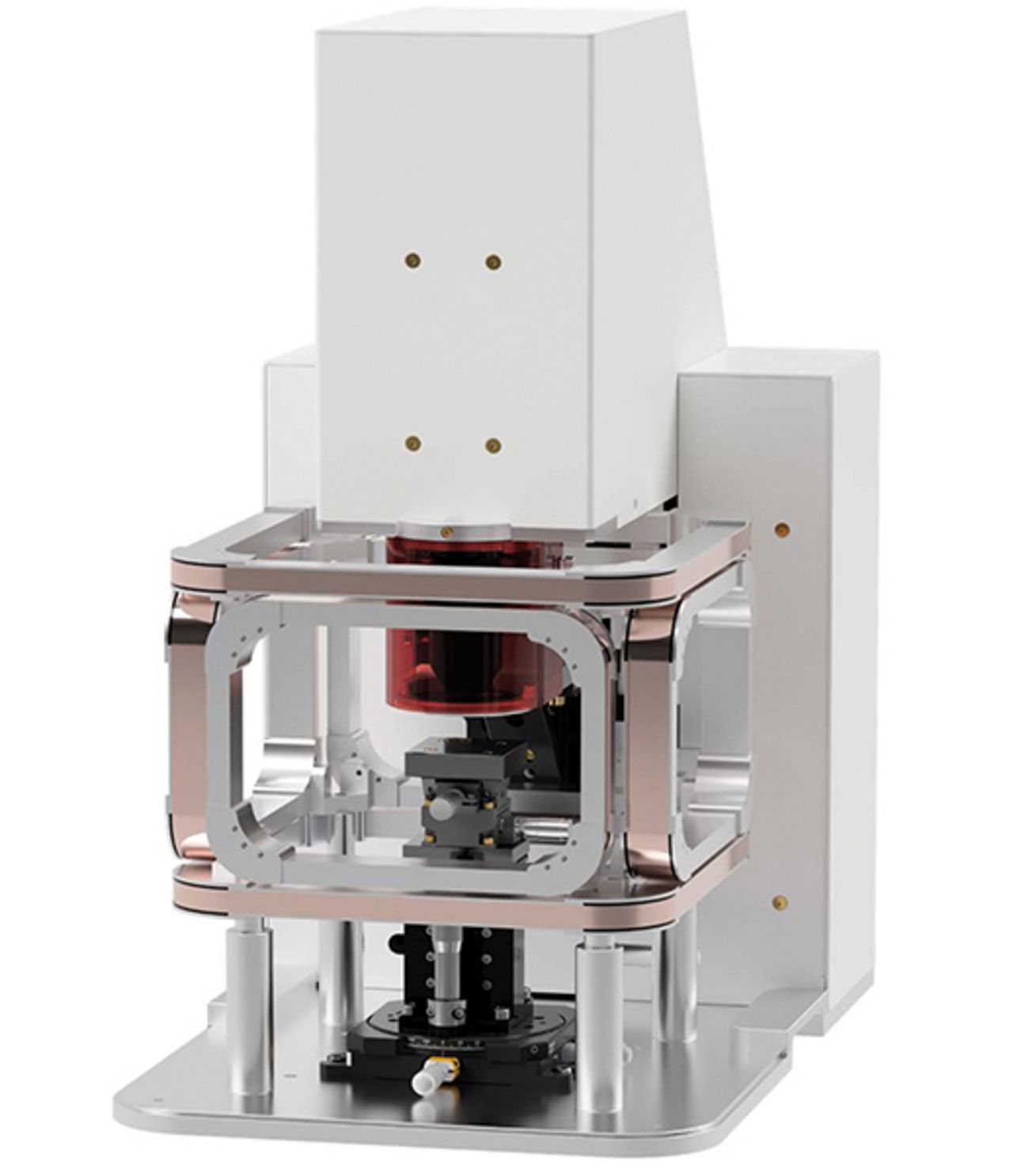
Modern paleomagnetic studies are often based on the measurement of rock samples in the centimeter range, as this size offers a good balance between handling, accuracy, and sufficient magnetic moment strength. However, natural rocks with complex geological histories often contain different generations of magnetization in the submillimeter range. For example, sedimentary rocks, including chondritic meteorites, can contain millimeter- or submillimeter-sized fragments with different magnetizations. In igneous rocks, small sub-areas may have more stable magnetizations than the surrounding material. Obtaining information about magnetic fields from such samples depends on the accurate measurement of the net moment. Due to their small size, many of these samples have net moments that cannot be detected with instruments commonly used in geology.
The need to measure samples with very low magnetic moments has led to the development of magnetic imaging techniques such as the SQUID microscope and the quantum diamond microscope (QDM). Both instruments typically produce maps of a single magnetic field component in the vicinity of the sample, with the QDM also capable of producing complete vector maps of the magnetic field. The QDM offers a whole range of additional advantages: it has a significantly larger field of view, shorter measurement times, and does not require a cryostat to cool the sensor. This makes the QDM a new, powerful measurement system for the magnetic characterization of geological samples.
Sensitivity:
- < 200 nT/Hz½ (at 10 micrometer spatial resolution)
- < 5 μT/Hz½ (1 micrometer spatial resolution)
- Spatial resolution: ≤ 1 micrometer
- Field of view: 4 x 4 mm2