Automated Electron Diffraction Reveals a New Dapsone Polymorph
In pharmaceutical development, identifying the crystalline forms of an active pharmaceutical ingredient (API) is essential for understanding properties such as solubility, dissolution rate, bioavailability, stability and manufacturability.
Crystal Structure Prediction (CSP) can explore the potential polymorphic landscape, but experimental structure elucidation is required to establish which crystalline forms are actually present. When crystals are below 1 µm, conventional single-crystal X-ray diffraction (SCXRD) may not be suitable for structural analysis.
The Dapsone Case Study
Dapsone (diaminodiphenyl sulfone, DDS) has been known for more than 100 years and is used for the treatment of leprosy and in dermatology. Five forms of the pure drug have previously been crystallographically characterised, with Form III believed to be the most stable polymorphic form.
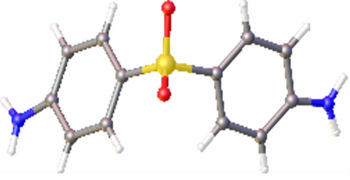
Figure 1. Molecular structure of dapsone (diaminodiphenyl sulfone).
Recent CSP studies predicted approximately 40 forms in the energy landscape and provided evidence for a new Form V as the most thermodynamically stable form.
A commercial Dapsone sample purchased from Sigma-Aldrich was analysed using the ELDICO ED-1electron diffractometer. A small portion of the sample was placed on a 3 mm diameter TEM grid and analysed using a fully automated electron diffraction workflow.
The experiment measured approximately 650 crystals in 24 hours. Around 47% corresponded to the known Form III, while approximately 3% produced another unit cell.
The new unit cell was monoclinic P2₁, with four independent molecules in the asymmetric unit (Z′ = 4). This form had not been predicted by the CSP studies. Its structure was successfully solved and refined.
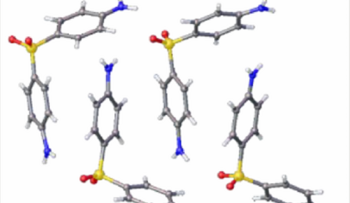
Figure 2. Asymmetric unit of the new dapsone form (Form VI): four independent molecules viewed along [100], an overlay highlighting the different dihedral angles seen for each molecule.
Why Electron Diffraction?
Electron diffraction (3D ED / microED) provides a complementary approach to SCXRD for crystalline materials with dimensions below 1 µm. The strong interaction between electrons and matter enables high-quality diffraction data to be obtained from very small crystals.
Automated data collection also allows large numbers of particles to be analysed in significantly less time than manual measurements, increasing the likelihood of identifying crystalline forms that may otherwise be missed.
Key Advantages
- Sub-micrometre crystal analysis for structural elucidation;
- Automated screening of hundreds of particles in a single experiment;
- Detection of crystalline forms within samples containing multiple crystal populations.
Would you like to learn more about this instrument or see it in action in your laboratory?
Contact our expert Marwan Channab to discuss your research needs.
If you would like to know more about the ELDICO ED-1 technical features, click here