Artemis: An Integrated Platform for Biophysical Research
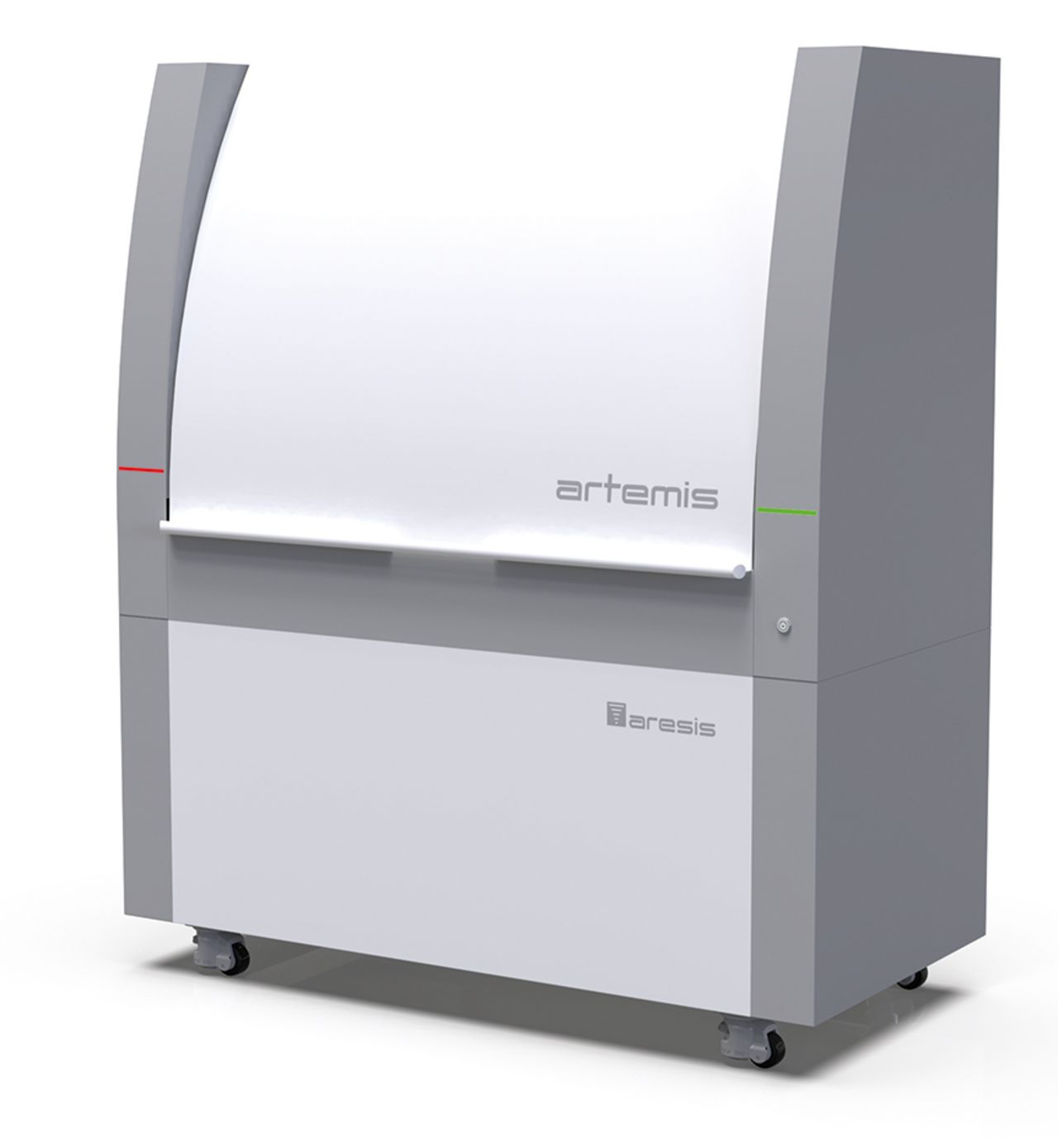
Experimental biophysics increasingly relies on modular systems that combine optical, microscopy, and microfluidic techniques in a precisely coordinated configuration. Artemis from Aresis provides such an integrated research platform. Its core concept is based on a flexible architecture that can be expanded incrementally. The system combines an inverted microscope, optical tweezers, fluorescence imaging, and microfluidics within a single Python-controlled platform. Its modular design allows it to be adapted to a wide range of research questions and expanded to accommodate future experimental methods.
Optical Imaging: Nikon Ti2 and Complementary Modules
The Nikon Ti2 inverted research microscope serves as the central imaging unit. It is fully compatible with the other components, and its flexible design supports all modules available for the Artemis platform.
Optical Manipulation with the Tweez305
The Tweez305 optical-tweezers module provides up to 2,500 parallel traps, enabling the dynamic manipulation of particles, cells, and individual molecules. An acousto-optic deflector provides subnanometer positioning precision and allows the strength of each trap to be controlled individually. The integrated force-measurement capability achieves a resolution of less than 100 fN, making the system suitable for applications in single-molecule biophysics, membrane mechanics, and cytoskeletal research.
Fluorescence Analysis with the FluoLED 6
The FluoLED 6 fluorescence module provides up to six excitation wavelengths, supporting a range of fluorophores and excitation spectra, including DAPI, FITC, Cy3, and Cy5. Temperature stabilization of the LED sources ensures reproducible spectral characteristics, which are essential for quantitative fluorescence measurements.
Optical Expansion with TIRF and Confocal Microscopy
A module for total internal reflection fluorescence (TIRF) microscopy has reached the proof-of-principle stage. Raman and confocal modules have also been announced for 2026. These additions will broaden the platformâ's experimental capabilities, particularly for spectroscopic studies and investigations of processes occurring close to surfaces.
Microfluidic Control
The PumpWiz 8 microfluidics module provides up to eight independently programmable syringe pumps. It supports stable low flow rates down to 0.0124 µL/min while also accommodating higher flow rates in complex microfluidic configurations. This enables precise control of microphysiological environments in studies of cell mechanics, transport processes, and colloidal systems.
Vibration Isolation and Laser Safety
The platform features active vibration isolation that effectively suppresses horizontal and vertical vibrations above 1 Hz. This provides the mechanical stability required for highly sensitive experiments, including single-molecule studies. All instruments are housed within a Class 1 laser-safety enclosure.
Software and System Integration
All modules are controlled through a shared Python-based software environment that coordinates instrument parameters, time-stamping, and synchronization while simplifying system operation. This is particularly valuable for multimodal experiments in which mechanical manipulation, optical imaging, and fluorescence data must be correlated along a common timeline.
The system can also be readily automated or adapted to specific experimental requirements using Python scripts developed by the users themselves.
Applications in Biophysics
Artemis addresses a range of key research questions in modern biophysics, including:
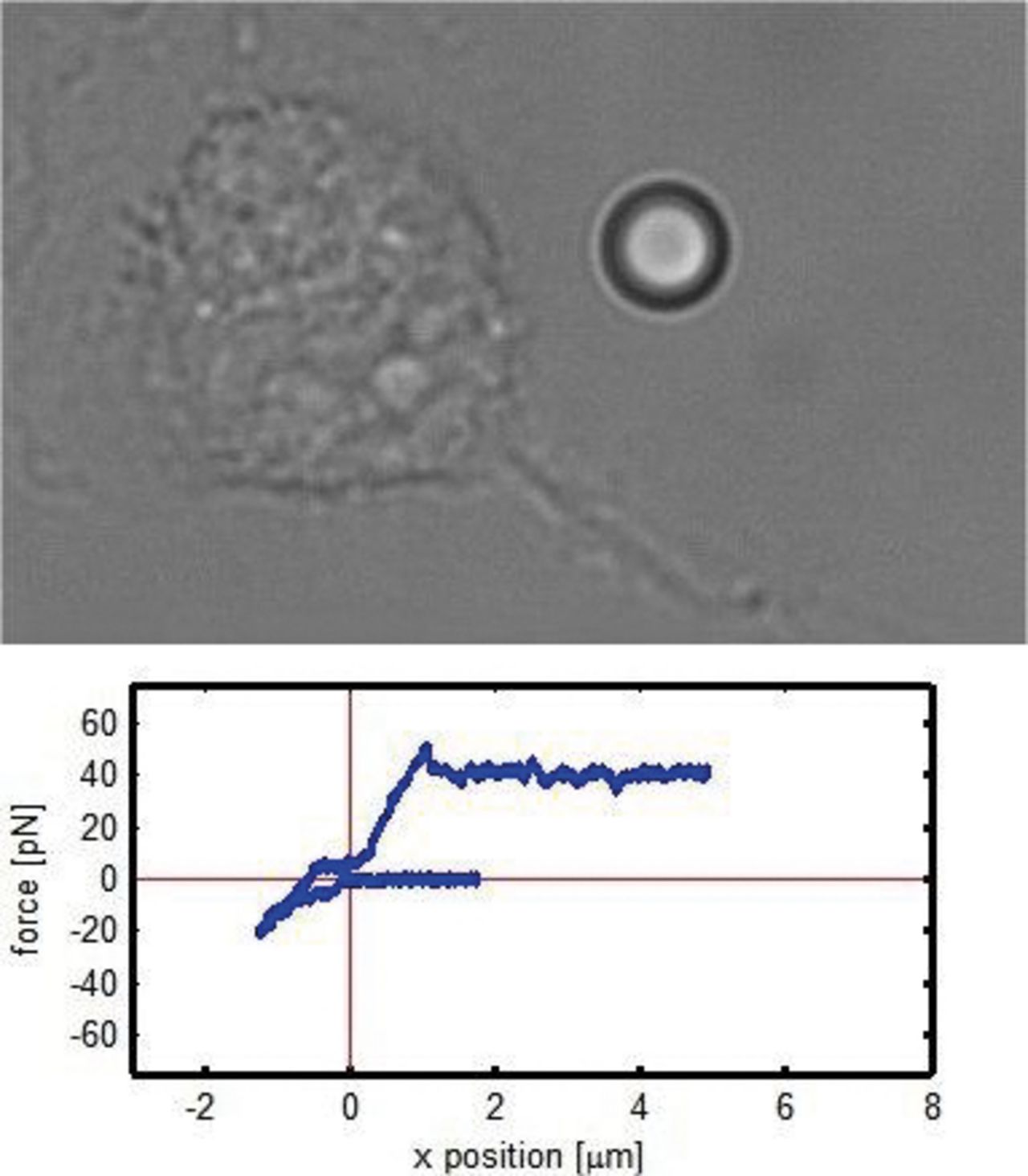
Measurement of cellular and membrane mechanics, such as erythrocyte deformation and vesicle-tether formation
Microrheology of complex microbial or polymeric environments
Single-molecule force spectroscopy
Cell diagnostics and sorting
Colloidal physics and the manipulation of microscopic particles
Investigation of soft matter, including liquid crystals
Representative applications include the manipulation of individual colloidal particles, force measurements on erythrocytes, and the extraction of membrane tethers from vesicles.
Summary
Artemis integrates state-of-the-art optical, fluorescence, and microfluidic technologies within a robust, modular platform. Its centralized Python-based control and excellent mechanical stability enable high-precision multimodal experiments ranging from single-molecule measurements to studies of cellular mechanics.
Discover how Artemis can advance your research.