
Biosensing Instrument SPRm Technology Supports Pfizer’s Discovery of Novel GPR61 Inverse Agonists
A recently published study, "Discovery of Potent and Brain-Penetrant Inverse Agonists for GPR61, an Orphan G Protein-Coupled Receptor", describes the discovery of a new class of potent, selective and brain-penetrant inverse agonists targeting GPR61, an orphan Class A GPCR expressed predominantly in the pituitary gland and appetite-regulating regions of the brain. The research identifies GPR61 as a promising therapeutic target for appetite and body weight modulation, revealing a novel mechanism of GPCR inverse agonism through binding to an induced intracellular allosteric pocket, thereby disrupting G protein interactions.
A key contribution to this work came from the SPRm 220 Series by Biosensing Instrument, which was used to quantify ligand binding on cell-based preparations. Cells were cultured on collagen-coated SPR sensor chips, fixed prior to analysis, and exposed to increasing concentrations of Compound 15. The label-free SPRm platform enabled direct measurement of ligand binding without the need for fluorescent or radioactive labels, and the resulting data were analysed using a 1:1 binding model to analyse ligand binding characteristics. Experiments were performed on three independently prepared chips across three separate days.
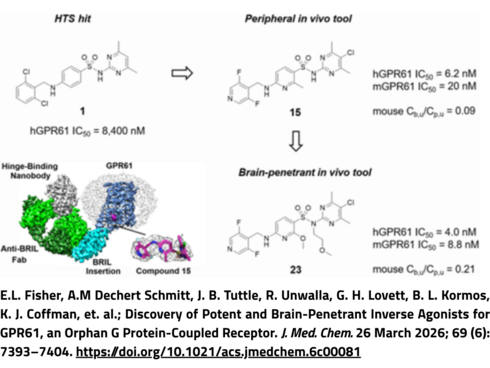
Figure 1. The chemical optimization strategy for the discovery of inverse agonists of the GPR61 receptor
Complementing the SPRm binding analysis, cryo-electron microscopy provided structural insights into the mechanism of action of Compound 15. The structure of GPR61 with Compound 15 showed a new way to turn off the receptor. The compound binds to a different site inside the receptor, this stops the receptor from working by blocking its contact with G proteins.
The researchers then tested Compound 15 in cells using HTRF assays. They found that the compound reduced the receptor's activity, confirming that it acts as an inverse agonist.
This study further demonstrates the value of SPRm for investigating receptor–ligand interactions while preserving the biological context of the target, offering researchers powerful insights that complement structural biology and medicinal chemistry workflows.
If you would like to learn how SPRm technology can support your research contact our expert Dario D'Ubaldo.