

Sensitive Detection of Higher Harmonics Using Quantum Light – Single-Shot Resolved Measurement with sCMOS Camera
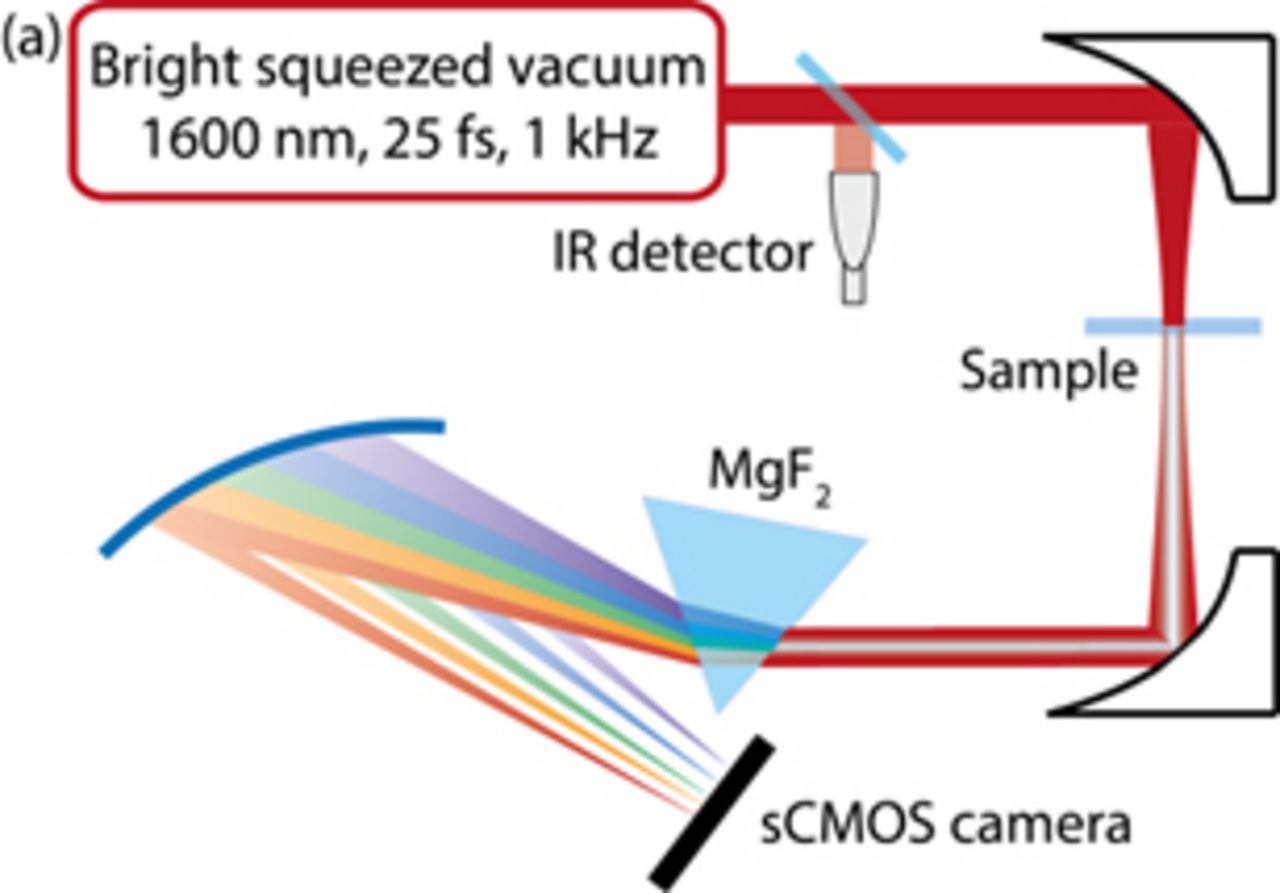
Fig.1 a: Experimental setup for HHG, driven by BSV

Fig. 1 b: Spectra of the high harmonics, recorded with the sCMOS camera, synchronized with the pump photon number.
Higher Harmonic Generation (HHG) is a fundamental phenomenon in strong light–matter interaction and the basis of attosecond physics [1]. Traditionally, HHG has been generated using classical light sources. However, recent research by Andrei Rasputnyi and Maria Chekhova (FAU Erlangen-Nürnberg & Max Planck Institute for the Science of Light) employs a nonclassical quantum state with unique statistical properties, known as Bright Squeezed Vacuum (BSV) [3,4].
Because BSV exhibits strong pulse-to-pulse fluctuations, the resulting spectra must be measured individually for each laser shot to extract information such as variance and cross-correlations. This places high demands on the detector: sensitivity to ultraviolet light, low noise, wide dynamic range, and high frame rate.
In their experiment, Rasputnyi and Chekhova used 25 fs BSV pulses at 1600 nm directed onto a lithium niobate crystal (Fig. 1a). A custom-built spectrometer consisting of a magnesium fluoride prism and an Andor Marana sCMOS camera recorded 120,000 spectra at a frame rate of 1 kHz. The camera was synchronized with an IR photodiode to capture the pump statistics of the BSV. By selecting a specific image region (2048×40 pixels) and applying vertical binning, the necessary speed was achieved.
The 4th to 7th harmonics (400 nm to 228 nm) were recorded. Spectral analysis revealed a blue shift with increasing photon number of the BSV, indicating plasma-induced effects in the sample (Fig. 1b).
This setup enabled the authors to, for the first time, visualize the statistical structure of HHG generated by quantum light in detail—a significant advance for quantum optics and ultrashort light pulse research.
References:
[1] Krausz & Ivanov, Rev. Mod. Phys. 81, 163–234 (2009)
[2] Popmintchev et al., Science 336, 1287–1291 (2012)
[3] Gorlach et al., Nature Physics 19, 1689–1696 (2023)
[4] Rasputnyi et al., Nature Physics 20, 1960–1965 (2024)
More about Cameras for EUV, X-ray and high-energy particle detection
Contact
| +49 6157 80710-754 | |
| +49 6157 807109754 | |
| Write e-mail |