
Seeing beneath the surface: The Apex-Hybrid X-ray Microscope
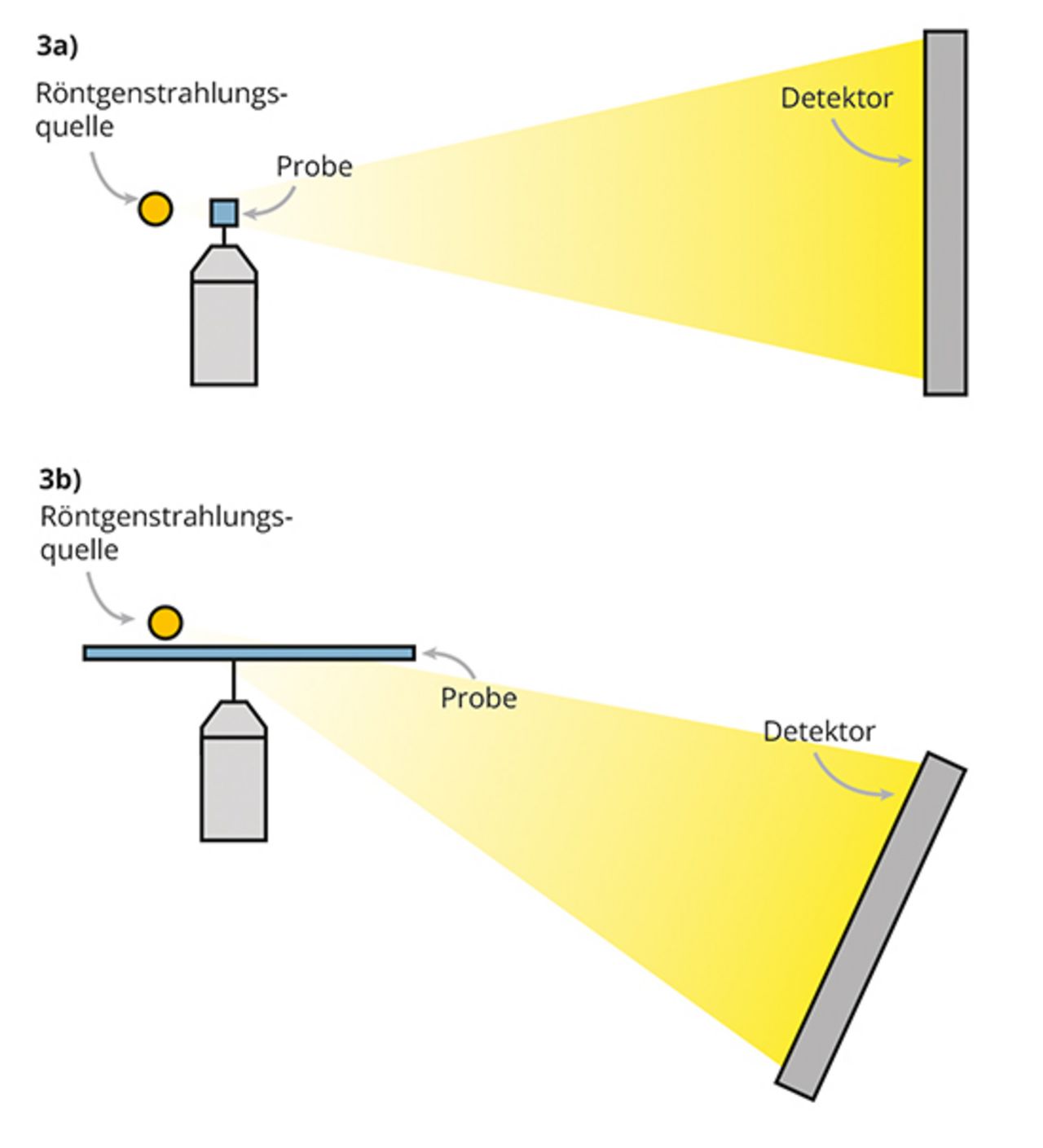
The Apex Hybrid switches between tomography (A) and laminography (B) modes. The source and detector rotate on gantries, directing the X-ray beam around the sample. This two-in-one design expands the system’s capabilities without the additional cost of a second source and detector.
Understanding the internal architecture of modern electronic components and advanced materials requires more than a sharp eye. It demands technologies capable of visualizing hidden layers without physical cross-sectioning. The Apex-Hybrid system, developed by Sigray, represents a major step forward in non-destructive 3D imaging, uniting x-ray laminography and computed tomography (CT) within a single, flexible instrument. This hybrid approach enables researchers and engineers to examine everything from complete printed circuit boards to individual microbumps with unprecedented clarity.
Traditional computed tomography reconstructs three-dimensional images by rotating a sample through a full range of angles while projecting x-rays through it. The method works well for compact, symmetrical objects such as biological specimens or small mechanical parts, but becomes impractical for large, flat samples like semiconductor wafers or circuit boards. Such specimens block too much radiation when tilted steeply, introducing image artifacts and reducing resolution.
Laminography, on the other hand, modifies this geometry. Instead of rotating the sample through 180° or more, the x-ray source and detector are inclined at a shallow angle to the sample’s surface. This geometry is ideal for planar samples and layered structures, allowing inspection of delicate packages without destructive thinning or sectioning. Yet laminography alone cannot easily achieve the submicron precision of true tomography. The Apex-Hybrid bridges this divide by combining both geometries ininto one instrument, selectable at the touch of a button.
At the heart of the system lies Sigray’s patented Precision Angle Laminography (PAL) architecture. Unlike conventional setups that move either the heavy x-ray source or the sample itself, PAL fixes both source and detector in place and mounts the sample on a high-stability air-bearing rotary stage. This design eliminates wobble, reduces mechanical error, and allows slant angles as low as ten degrees which are critical for minimizing the “missing cone” of information that traditionally limits laminographic reconstructions. The result is clearer visualization of vertical interconnects, redistribution layers, and through-silicon vias with fewer streaking artifacts and more reliable dimensional measurements.
The Apex-Hybrid achieves spatial resolution better than 400 nanometers, with voxel sizes approaching 100 nm. Its open x-ray source incorporates internal calibration targets that monitor and adjust the focal spot size for every scan, ensuring consistent metrology even over thousands of operating hours. The modular detector system supports several configurations—from large-area, high-throughput sensors to small-pixel cameras optimized for nanoscale features—so users can tailor imaging performance to their application.
Automation further distinguishes the platform. A built-in sample-handling robot loads and scans up to ten 100×100 mm2 samples sequentially, enabling unattended, recipe-based operation. For smaller specimens, the stage’s travel range allows virtual automation without physical transfer, increasing productivity in multi-sample studies.
Sigray’s integrated software suite unifies acquisition, reconstruction, and analysis. The XRM Companion interface guides users through optimized scanning workflows, while GigaRecon, a GPU-accelerated reconstruction engine, converts raw projections into volumetric datasets within minutes. Results can be explored in 3D using Sigray’s Viewer or exported to advanced analytics environments such as Dragonfly or Avizo. Open-source Python control expands the system’s capabilities, linking hardware automation and data analysis within custom research pipelines.
While the Apex-Hybrid was conceived for semiconductor failure analysis and advanced packaging, its dual-mode flexibility extends to materials science, geology, and biology. Thin tissue sections, composite laminates, and micro-structured rocks benefit from laminographic imaging, whereas denser samples can be studied in tomography mode for high-contrast volumetric reconstructions. The ability to adapt imaging geometry to sample geometry makes the Apex-Hybrid a versatile instrument for laboratories where sample diversity is the rule, not the exception.
By merging two complementary imaging modalities in a single, precisely engineered platform, the Sigray Apex-Hybrid eliminates the traditional trade-off between resolution and sample size. Its combination of mechanical stability, automated operation, and quantifiable nanoscale resolution makes it a cornerstone tool for next-generation research and manufacturing quality assurance. For those seeking to visualize the invisible - from intricate semiconductor interconnects to the internal structure of complex materials - the Apex-Hybrid offers a new way to see beneath the surface, with scientific precision and industrial reliability.