Quorum PP3010: A Cryogenic Upgrade for Your Scanning Electron Microscope

Fig. 1: PP3010 preparation chamber attached to an SEM
Since the 2017 Nobel Prize was awarded for the development of cryogenic transmission electron microscopy (cryo-TEM), the technique has attracted considerable scientific attention. It is frequently used to investigate biological specimens such as viruses and proteins. Thousands of individual images are acquired and subsequently combined using single-particle analysis to reconstruct a three-dimensional volume. This approach provides valuable insights into the structures of biological macromolecules and particles.
During the COVID-19 pandemic in particular, cryo-TEM proved to be an essential technique for improving our understanding of structures in the submicrometre range, including viruses. However, it is not the only electron microscopy method that enables specimens to be examined in a state that closely resembles their native condition.
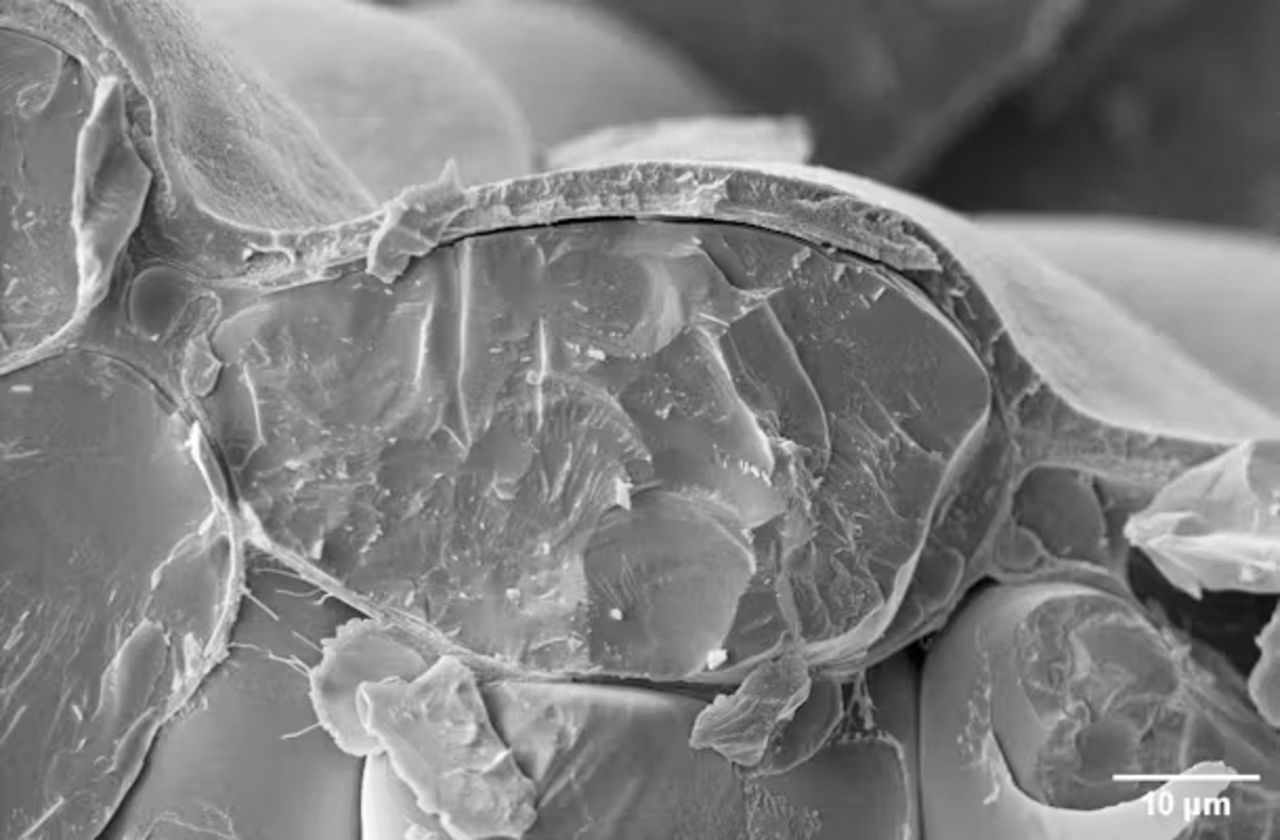
Fig. 2: Example of a specimen prepared using the PP3010: a freeze-fractured ginkgo leaf sputter-coated with Au–Pd
Cryogenic scanning electron microscopy (cryo-SEM) is also well established in biology and medicine for analysing specimens in the frozen state. In recent years, its use in materials science has also grown steadily. There is an increasing need to investigate materials that undergo substantial changes or may even be damaged or destroyed when exposed to the electron beam. One way to minimise such beam-induced damage is to examine specimens under cooled or frozen conditions. Liquid nitrogen is commonly used for this purpose, as rapid cooling helps prevent water crystallisation. Battery materials are one example of particularly sensitive specimens.
With its PP range, Quorum Technologies offers a variety of solutions covering inert sample transfer, sample cooling and the comprehensive PP3010 cryogenic preparation system. The latter is presented in greater detail below.

Fig. 4: Quorum’s application specialist introducing a specimen into the SEM via the PP3010 preparation chamber
The PP3010 comprises several components: a nitrogen-gas-cooled sample stage, the Prepdek® for freezing specimens, a unit for transferring cooled specimens—or specimens under an inert atmosphere—into the scanning electron microscope, and a preparation chamber (Fig. 1) connected directly to the SEM.
Compared with many competing systems, this additional preparation chamber offers a decisive advantage: the frozen specimen can be further prepared under vacuum by freeze-fracturing and subsequently coated with a conductive layer without requiring an additional transfer step. The specimen is fractured inside the PP3010 and can then, for example, be sputter-coated with platinum or carbon-coated by evaporation. It remains cooled throughout the entire process to minimise contamination caused by ice-crystal formation. Automated procedures also enable controlled specimen sublimation, providing a further means of reducing ice crystals on the specimen surface. The frozen, freshly exposed and coated specimen can then be transferred directly into the SEM for analysis.
Alternatively, the PP3010 can be connected to many commonly used FIB-SEM systems. A focused ion beam (FIB) can be used to selectively prepare a region of interest, either for further SEM analysis or to produce a TEM lamella that can subsequently be examined by cryo-TEM.
In addition to an automated cooling solution—which is expected to support operating times exceeding 24 hours in the future—the Prepdek® is another important module. In this system, liquid nitrogen is placed under vacuum to produce so-called “slush” nitrogen, a mixture of solid and liquid nitrogen. Compared with liquid nitrogen alone, this mixture provides a higher cooling rate and greater thermal stability. It therefore enables particularly rapid specimen freezing, reducing ice-crystal formation and improving the preservation of specimen structure. The Prepdek® can also be used to mount previously frozen specimens in the sample holders designed for the PP3010.
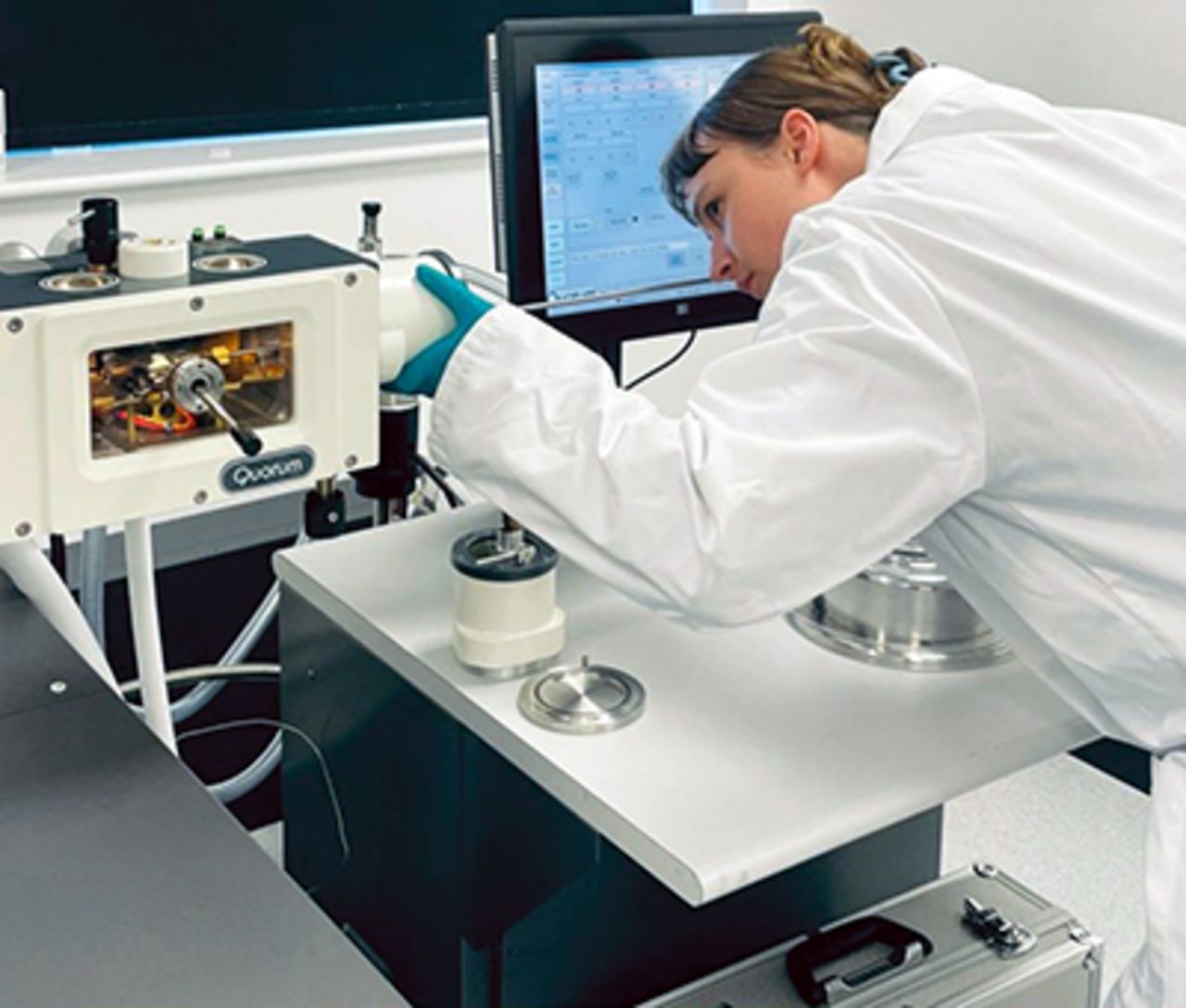
Fig. 4: Quorum’s application specialist introducing a specimen into the SEM via the PP3010 preparation chamber
Specimens produced inside gloveboxes because of their high reactivity with oxygen or ambient air can be loaded directly from the glovebox into the transfer holder using an optional interface.
Anyone wishing to gain a more detailed impression of how the PP3010 can be used as a cryogenic preparation solution can visit the dedicated digital showroom on the Quorum Technologies website. Its individual components can even be explored using augmented reality. Quorum also offers online demonstrations: together with the application specialist in the United Kingdom, we connect remotely while she demonstrates the PP3010 workflow—using your own specimens if desired.
If you are interested in retrofitting your existing (FIB-)SEM with a PP3010, please feel free to contact us. Integration is possible with most widely used systems. We will be pleased to advise you and assess whether your electron microscope is suitable for the upgrade.
More about cryo preparation system for scanning electron microscopy