

Flexible quartz crystal microbalance system
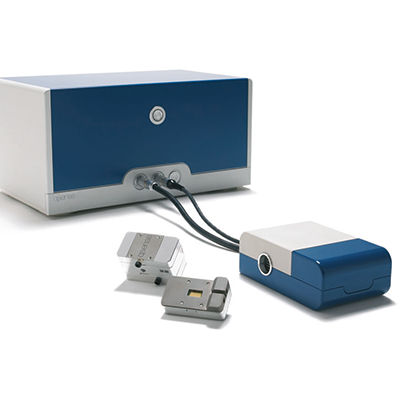
Explorer from QSenseThe QSense Explorer is a versatile and modular QCM-D system for real-time investigation of surface interactions. The instrument enables quantification of mass and viscoelastic properties of thin films and can be flexibly combined with complementary techniques such as microscopy, electrochemistry, and ellipsometry. Thanks to its modular architecture, the system is suitable for a wide range of experimental conditions, including elevated temperatures, variable gas-phase conditions, and specialized chemical environments.
- Modular single-channel QCM-D system
- Measurement of frequency and dissipation at 7 harmonics
- Quantification of mass and viscoelastic properties
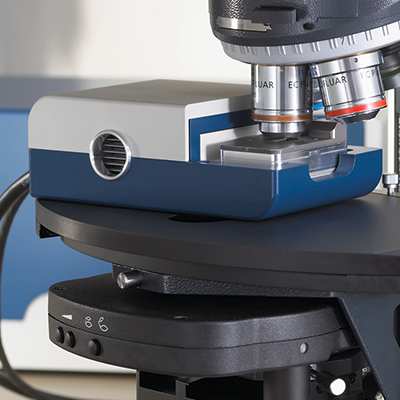
- Combination with microscopy, electrochemistry, and ellipsometry
- Suitable for measurements under specialized conditions
- Up to 300 data points per second
- QSense Decay Technology for fast and precise data acquisition
- 5 Speed-to-Noise modes for optimized time resolution and detection limits
- Peltier-controlled measurement chamber
- Temperature range from 15 to 65 °C
- Expandable to 4 to 150 °C with high-temperature chamber
- Support for flow and stagnant measurements
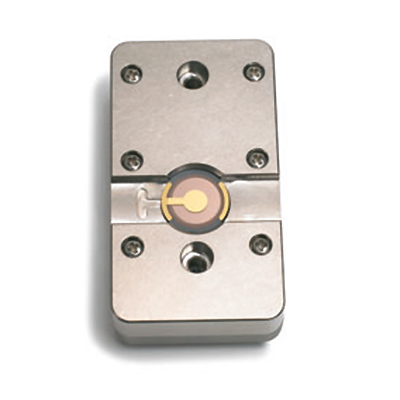
- Compatible with various specialty modules and sensor surfaces
- Includes Dfind analysis software
Further information
The QSense Explorer was developed for high-precision QCM-D measurements and enables real-time investigation of surface and interfacial processes with excellent stability and low drift. The system combines high measurement quality with a highly flexible and modular platform.
QSense Decay Technology is based on the analysis of the sensor resonance decay curve. Frequency and dissipation values are recorded under non-voltage conditions. According to the manufacturer, up to 300 independent frequency and dissipation values per second can be acquired.
By measuring seven harmonics, the system enables analysis of viscoelastic properties of soft films in addition to mass changes. The system supports full viscoelastic modeling including:
- Mass or film thickness
- Viscosity
- Shear modulus
- Frequency-dependent viscoelastic parameters
The modular platform allows adaptation to different experimental requirements. Specialized modules enable combined measurements with microscopy, electrochemistry, or ellipsometry, as well as measurements under controlled humidity, elevated temperatures, or gas-phase and vacuum conditions.
Measurement Modules
| Module | Description |
| QWM401 Window Module | Provides optical access to the sensor surface and supports combined QCM-D and microscopy measurements. Enables UV-induced reaction studies and integration with fluorescence detectors. |
| QEM401 Electrochemistry Module | Enables simultaneous QCM-D and electrochemical measurements including QCM-D/EIS measurements. The sensor substrate acts as the working electrode. |
| QELM401 Ellipsometry Module | Enables simultaneous QCM-D and ellipsometry measurements on the same surface for analysis of solvent content and morphological film changes. |
| QHM401 Humidity Module | Designed for investigating vapor uptake and release in thin films under controlled humidity conditions. |
| QOM401 Open Module | Allows direct pipetting onto the sensor surface and reduces required sample volume. Suitable for evaporation studies. |
| QHTC101 High Temperature Chamber | Extends the operating temperature range to 4–150 °C for flow and stagnant measurements. |
Specifications
| Parameter | Description |
| Measurement channels | 1 |
| Harmonics | 7 |
| Temperature range | 15 to 65 °C |
| Extended temperature range | 4 to 150 °C with QHTC101 |
| Maximum time resolution | 300 data points per second |
| Minimum sample volume (stagnant mode) | ~40 µl |
| Minimum sample volume (flow mode) | ~200 µl |
| Sensor frequency | 5 MHz |
| Flow rates | 25–150 µl/min |
| Software | QSoft Acquisition Software, Dfind Analysis Software |
| Operating system | Windows 10 or later |
| Interfaces | USB 2.0 |
Applications
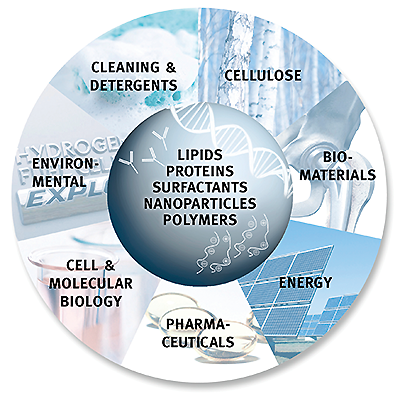
- Adsorption and desorption studies
- Binding studies
- Cross-linking processes
- Swelling and collapse behavior of thin films
- Electrochemical measurements
- Electrochemical impedance measurements
- Vapor uptake and release
- Polymer analysis
- Corrosion studies
- Microscopy-coupled QCM-D measurements
- Ellipsometry-coupled QCM-D measurements
- Measurements at elevated temperatures
- Gas-phase and vacuum measurements
Downloads


Contact

Navigation
Categories
Contact
Quantum Design GmbH
ul. Sztygarska 12/3
41-500 Chorzow
Poland
| Mobile: | +48 515 166893 |
| E-mail: | polandqd-europe.com |
Support