
How Do I Choose the Right Coating System for Electron Microscopy Samples?
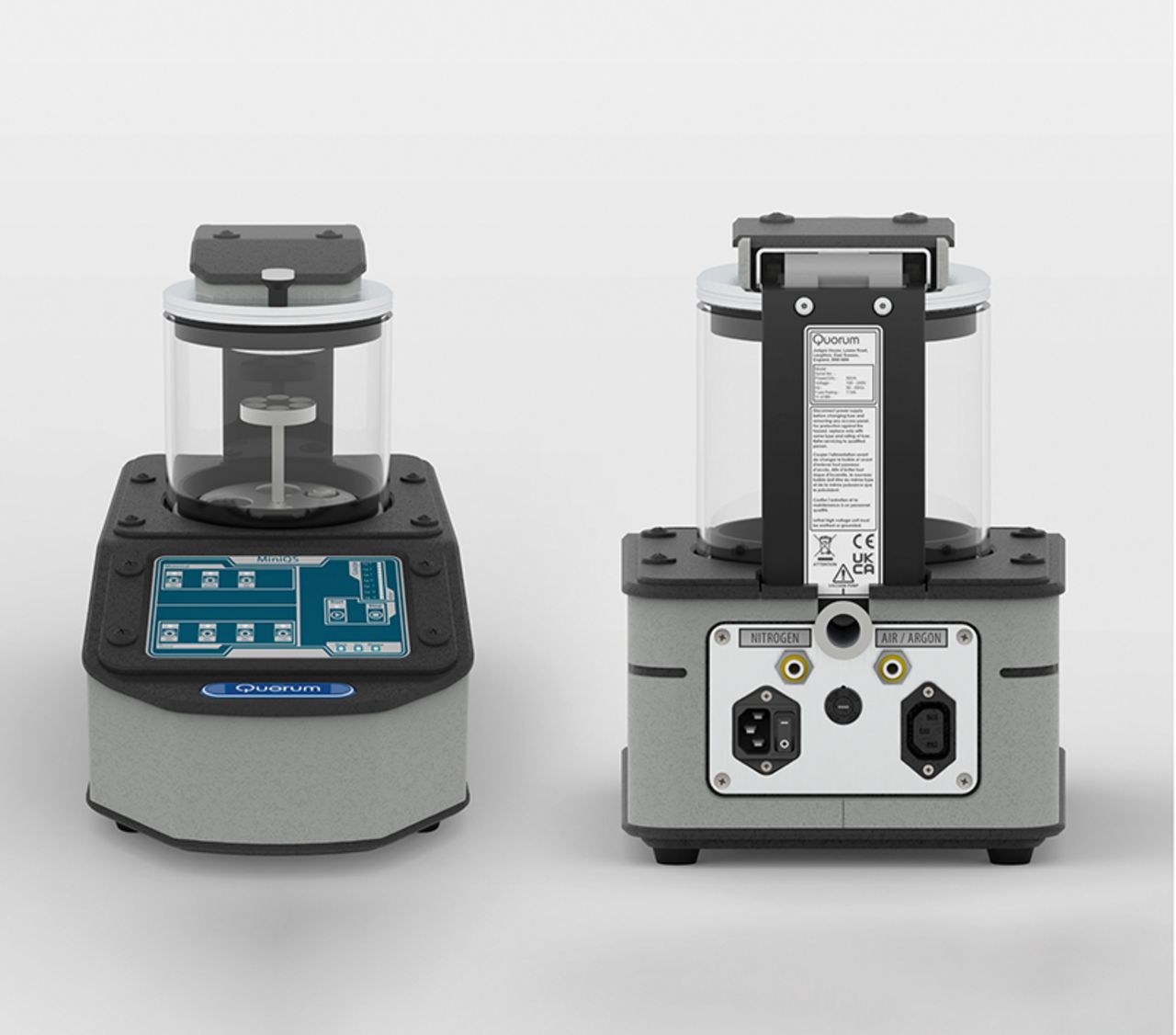
MiniQ S
Depending on the application, electron microscopy samples are prepared using either a sputter coater for metal deposition or a carbon evaporator for carbon coating. Both techniques are used to provide a conductive surface on non-conductive samples. Ease of operation and a high degree of automation are important factors when selecting a suitable system.
Which Electron Microscope Do You Use?
The appropriate coating system depends largely on the type and resolution of the microscope:
- Low-resolution tabletop SEM: MiniQ S for gold coating under rough-vacuum conditions
- Tungsten-filament SEM at magnifications of up to 50,000×: RotaQ S with a gold target
- Magnifications of up to 100,000×: RotaQ S with a platinum target; a longer pump-down time is required
- Magnifications above 100,000× or high sample throughput: TurboQ S with a turbomolecular pump for high-vacuum operation and the deposition of particularly fine coatings of gold, platinum, chromium, iridium or tungsten
- Field-emission SEM or TEM: A high-vacuum coating system such as the TurboQ is recommended
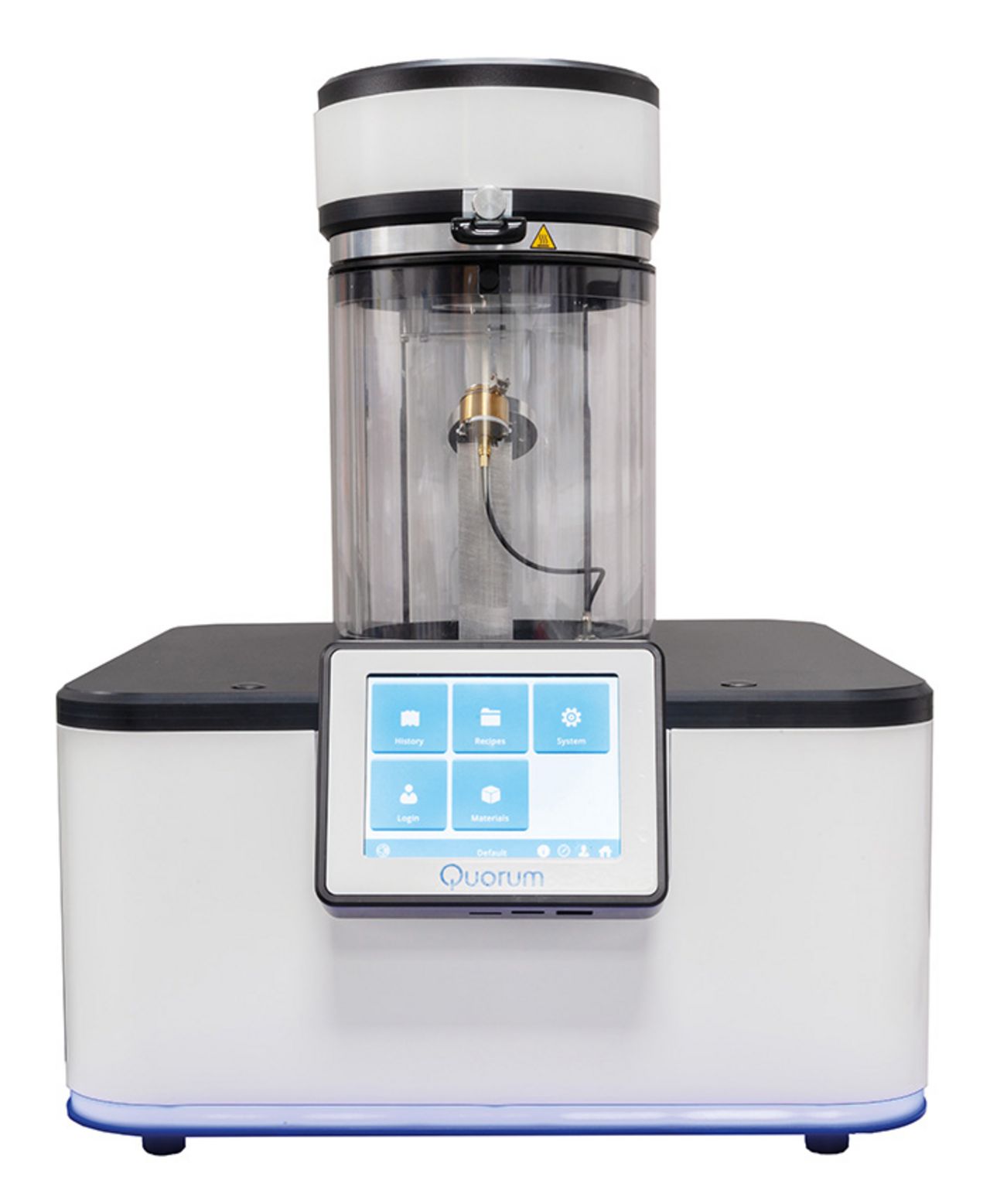
QCoat: RotaQ / TurboQ
Metal or Carbon Coating?
Metal coatings such as gold or platinum are well suited to high-resolution SEM imaging. However, they can affect energy-dispersive X-ray spectroscopy (EDS/EDX) by introducing additional X-ray peaks or attenuating signals from the sample.
Carbon coatings are generally preferable for EDS/EDX analysis because carbon has comparatively little influence on the X-ray spectrum. For tabletop SEMs and instruments equipped with tungsten or LaB₆ electron sources, the RotaQ E with a carbon-fibre evaporation source is a suitable choice. For high-vacuum applications requiring particularly pure and stable carbon films—such as electron backscatter diffraction (EBSD) or the preparation of TEM support films—the TurboQ E with a carbon-rod source is recommended.
Combined Metal and Carbon Coating Systems
For applications requiring both metal and carbon deposition, the RotaQ ES and TurboQ ES combination systems provide both coating methods in a single instrument.
Additional Considerations
QCoat-series instruments provide automatic coating-recipe recommendations and can store user-defined process parameters. A quartz crystal microbalance thickness monitor for process control is included as standard.
If you are uncertain which system is best suited to your application, we recommend arranging a test coating or visiting our demonstration laboratory in Pfungstadt.